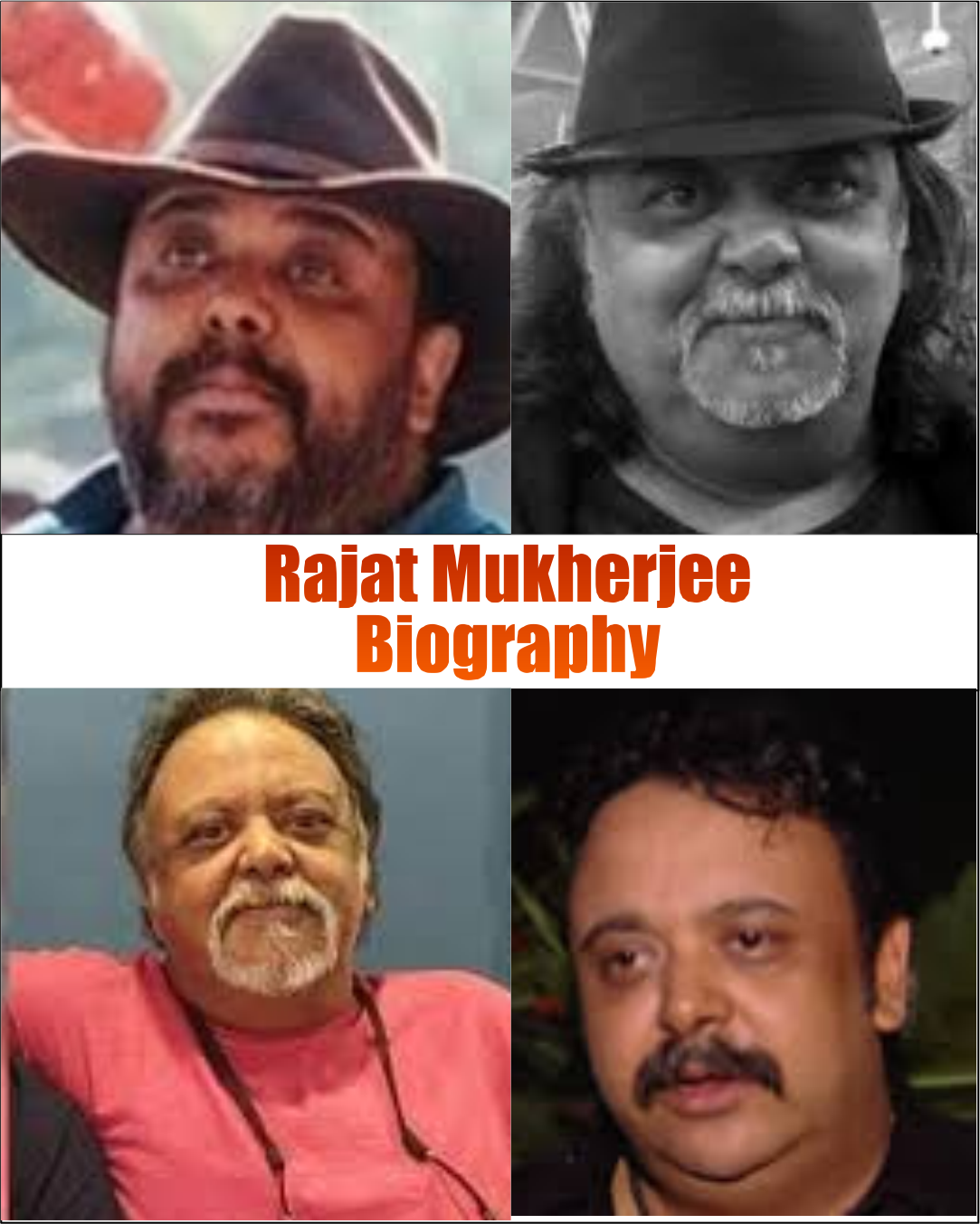
Rajat Mukherjee Biography
The Rajat Mukherjee Biography: The Director Who Told Stories Nobody Else Dared To.
Bollywood in 2001 was a world of color, romance, and choreographed rain sequences. Into that world, a relatively unknown director named Rajat Mukherjee walked in with a story about obsession, psychological unraveling, and the dark places love can drag a person – and audiences could not look away.
That film was Pyaar Tune Kya Kiya. And it announced, loudly and unmistakably, that a bold new cinematic voice had arrived.
What followed was a career too short, a life cut even shorter, and a legacy that quietly reshaped what mainstream Hindi cinema believed its audiences were willing to watch.
Rajat Mukherjee Biography
| Information | Details |
|---|---|
| Full Name | Rajat Mukherjee |
| Date of Birth | 1960 (Year widely cited; exact day not publicly documented) |
| Place of Birth | India (public sources list India as birth country) |
| Nationality | Indian (by birth and career context) |
| Occupation | Film director, writer, filmmaker |
| Known For | Pyaar Tune Kya Kiya, Road, Love in Nepal |
| Career Span | Active primarily 1990s – 2010s in Bollywood directing and writing films |
| Style | Urban and psychological storytelling with depth in characters and narrative realism |
| Date of Death | 19 July 2020 in Jaipur, India (after prolonged illness) |
The Bombay Years – Building a Dream in a Crowded City
Rajat Mukherjee came up through the early struggles of Bombay’s film world – that grinding, unglamorous phase that every filmmaker knows but few discuss publicly. He was part of a generation of young directors who haunted the same film sets, shared the same financial anxieties, and consumed, by all accounts, considerable quantities of Old Monk rum while arguing about cinema into the early hours of the morning.
Among those friends was Hansal Mehta, later director of Aligarh and Scam 1992, and Anubhav Sinha, who would go on to direct Article 15 and Thappad. These were not casual acquaintances – they were fellow travelers in the same dream, shaping each other’s creative instincts through years of shared struggle before any of them had made a single notable film.
That context matters enormously. Rajat Mukherjee was not a filmmaker who emerged from a film school or a privileged industry background. He built his craft the old way – in the trenches, watching, learning, and waiting for his moment.
See also: Dick Van Dyke Biography: The Extraordinary Life of One Hundred Years of Joy
Pyaar Tune Kya Kiya – A Thriller That Broke the Template
In 2001, that moment arrived.
Pyaar Tune Kya Kiya marked Rajat Mukherjee’s directorial debut – a film he also co-wrote, earning a nomination for Best Screenplay at the Screen Weekly Awards in 2002. Starring Urmila Matondkar, Fardeen Khan, and Sonali Kulkarni, the film told the story of a wealthy, obsessive woman willing to destroy everything – including herself – to possess the man she desired.
For a Bollywood landscape accustomed to love stories where longing was picturesque and heartbreak was poetic, this was a genuinely unsettling departure. Mukherjee was not interested in the beauty of romance – he was interested in its pathology. The film explored emotional manipulation, dangerous fixation, and the psychological cost of unchecked desire in ways that felt more European art cinema than mainstream Bollywood.
The film received nine award nominations in total – a remarkable achievement for a debut feature with such unconventional material. More importantly, it proved that Hindi cinema’s audience was hungry for something darker, more complex, and more honest about the human capacity for self-destruction.
Road – A Highway, a Hitchhiker, and a Star Is Born
The following year, Mukherjee returned with Road (2002) – a suspense thriller built around a couple on the run whose fateful decision to pick up a stranger on a desolate highway sets off a spiral of violence and psychological terror.
What Road is perhaps most historically significant for, beyond its own considerable merits, is what it launched. Vivek Oberoi made his acting debut in Road, winning the Best Newcomer Award for his performance. Mukherjee saw something in Oberoi before the rest of the industry did – that instinct for talent, for casting the right person before they became obvious, is one of a director’s most underrated gifts.
The film was nominated for both a Filmfare Award and a Screen Weekly Award in 2003, adding critical validation to what was already becoming a clear directorial signature: intelligent, psychologically rich thrillers that used genre conventions to explore genuinely uncomfortable human truths.
Did you know?
Road featured Manoj Bajpayee in a role that many consider among his most chilling – a villain of quiet, methodical menace that demonstrated exactly why Bajpayee is one of Indian cinema’s great character actors. Mukherjee understood how to use him, and Bajpayee never forgot it.
Love in Nepal, Ishq Kills, and a Career Interrupted
In 2004, Mukherjee directed Love in Nepal, a thriller featuring Sonu Nigam in a dramatic role – a film about a couple whose holiday takes a dangerous turn when the hero finds himself entangled in a murder plot. Critically received, it nonetheless marked a quiet retreat from the commercial spotlight.
For reasons that remain largely undocumented, Mukherjee stepped back from feature film direction after 2004. A decade passed. Then, in 2014, he returned through television, directing Ishq Kills – a crime anthology series broadcast on Star Plus, built around the idea that love and lust, left unchecked, can become the most dangerous forces in human life.
It was, in retrospect, a perfect fit. The same thematic obsessions that had defined his films – the darkness inside desire, the violence that intimacy can produce – found a new home in episodic television, reaching audiences who had perhaps never seen Pyaar Tune Kya Kiya or Road in theaters.
A Life Interrupted by Lockdown and Illness
The final chapter of Rajat Mukherjee’s life unfolded against the backdrop of one of the most surreal periods in modern history.
He had traveled to Jaipur to spend Holi with his family – and then India’s nationwide COVID-19 lockdown was announced, leaving him stranded there. What was meant to be a brief family visit became an indefinite stay. And it was during those months, far from the industry he had spent his life in, that his health began to deteriorate rapidly.
He developed breathing difficulties and was taken for a COVID-19 test, during which doctors discovered that his sodium-potassium levels were severely imbalanced. Kidney and heart issues followed. Approximately two weeks before his death, one of his kidneys was removed, and he was placed on dialysis.
On the night of July 18, his wife – who had been caring for him throughout – noticed something was wrong after he returned home from a dialysis session. He passed away in the early hours of July 19, 2020, reportedly in his late fifties. The cause was kidney failure, compounded by multiple health conditions – not the simple cardiac arrest the original reports somewhat reductively described.
When Bollywood Said Goodbye
The tributes that poured in after his death were not the polished, publicist-drafted kind. They were raw, personal, and specific – the kind of grief that only comes from people who actually knew someone.
Manoj Bajpayee wrote on social media: “My friend and director of Road, Rajat Mukherjee passed away in the early hours today in Jaipur after a long battle with illness. Rest in peace Rajat. Still can’t believe that we will never meet or discuss our work ever again. Khush reh jaha bhi reh.”
Hansal Mehta’s tribute reached further back, to the Bombay years where their friendship was forged: “Rajat Mukherjee, director of Pyaar Tune Kya Kiya and Road, was a friend from our early, early struggles in Bombay. Many meals, many bottles of Old Monk consumed. Many more to consume in another world. Will miss you, dear friend.”
Anubhav Sinha, characteristically direct, simply said: “Another friend gone too soon.”
Three tributes. Three different registers of grief. All pointing toward the same truth – that Rajat Mukherjee was not just a filmmaker his colleagues respected. He was a man they loved.
He is survived by his wife, his mother, and his brother.
What He Left Behind
Rajat Mukherjee directed fewer than five feature films. By the metrics that Bollywood typically uses to measure success – box office numbers, award shelves, franchise sequels – his output was modest. But metrics have never been particularly good at measuring impact.
He helped introduce psychological thriller as a commercially viable genre in mainstream Hindi cinema at a time when that was genuinely considered a risk. He launched Vivek Oberoi’s career. He gave Manoj Bajpayee one of his most memorable villainous roles. He made a film about obsession so unsettling that audiences are still talking about it two decades later.
And he did all of this while remaining, by every account of those who knew him, someone you actually wanted to have a meal with – someone who cared more about the story than the spotlight, more about the work than the recognition.
In the end, that might be the most enduring thing about Rajat Mukherjee. The films outlasted the fame. And the person outlasted both.
Frequently Asked Questions
1. Who was Rajat Mukherjee?
Rajat Mukherjee was an Indian film director and writer known for his work in mainstream Bollywood cinema. He gained recognition for directing movies that explored psychological and complex narratives, setting him apart from conventional Bollywood filmmakers of his era.
2. What films is Rajat Mukherjee best known for?
He is best known for directing films like Pyaar Tune Kya Kiya (2001), Road (2002), and Love in Nepal (2004) — each reflecting his distinct narrative style that combined emotional tension and character depth.
3. When did Rajat Mukherjee pass away?
Rajat Mukherjee passed away on 19 July 2020 in Jaipur, India, after battling health issues. His death was widely reported by Bollywood media and fellow industry members.
4. What was unique about his directorial style?
Unlike many directors focused solely on song‑and‑dance spectacles, Mukherjee’s films often used urban storytelling and psychological tension, bringing out realistic characters and emotionally charged plots that resonated with a segment of Bollywood audiences seeking narrative depth.
5. Did Rajat Mukherjee work in other film roles?
Yes — in addition to directing, he also took on writing roles, such as contributing the screenplay and story for Pyaar Tune Kya Kiya. His filmography includes both directing and writing credits.