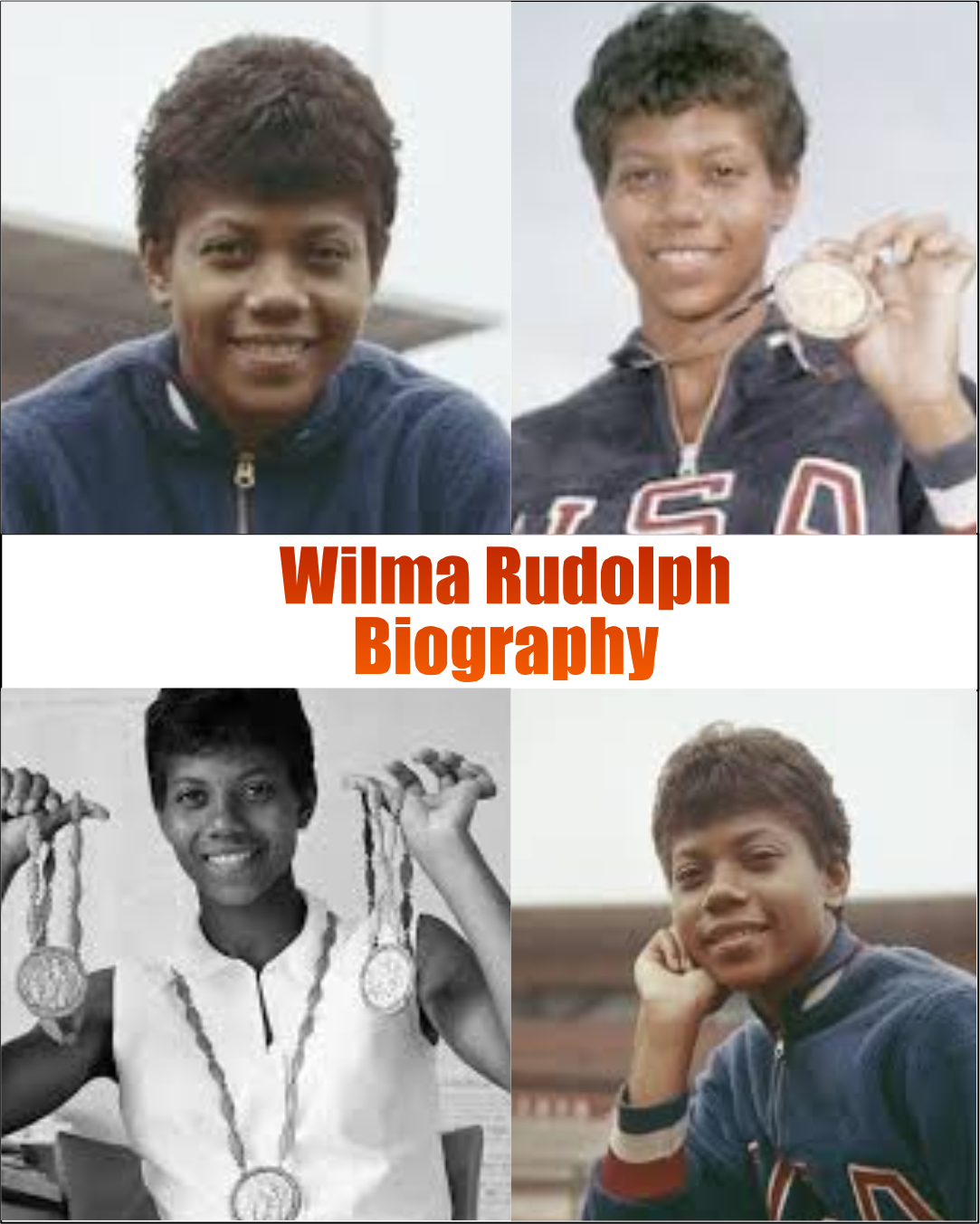
Wilma Rudolph Biography
The Wilma Rudolph Biography: From crippled, She Became the Fastest Woman on Earth
Wilma Rudolph was the 20th of 22 children, paralysed by polio at four, told she would never walk, running with a leg brace at eight, sprinting at eleven. In Rome 1960 she became the first American woman to win three Olympic gold medals in track and field. She came home and refused to attend a segregated parade — forcing her Tennessee hometown to hold its first integrated public event in history.
The Doctor Said She Would Never Walk. She Became the Fastest Woman on Earth: The Story of Wilma Rudolph
The doctor’s exact words were not softened for the child’s benefit.
“My doctor told me I would never walk again,” Rudolph wrote in her autobiography. “My mother told me I would. I believed my mother.”
She was four years old. She had just been diagnosed with polio on top of double pneumonia and scarlet fever — three simultaneous illnesses in a premature child who weighed four and a half pounds at birth and had already spent most of her short life fighting something.
By eleven, Wilma Rudolph was running.
By twenty, she was the fastest woman on earth.
Wilma Rudolph Biography
| Category | Details |
|---|---|
| Full Name | Wilma Glodean Rudolph |
| Date of Birth | June 23, 1940 |
| Place of Birth | Saint Bethlehem, Tennessee, USA |
| Nationality | American |
| Profession | Sprinter, Athletic Champion, Humanitarian, Educator |
| Field of Work | Athletics, Civil Rights, Education, Youth Development |
| Notable Achievement | First American woman to win three gold medals at a single Olympic Games — at the 1960 Rome Olympics in the 100m, 200m, and 4x100m relay |
| Legacy | Celebrated as one of the greatest athletes in American history and a pioneering figure in both sport and the Civil Rights Movement |
Clarksville — The Twentieth of Twenty-Two
Wilma Glodean Rudolph was born on June 23, 1940, in St. Bethlehem, near Clarksville, Tennessee, the 20th of 22 children born to her father Ed across his two marriages.
The family was poor. Ed Rudolph worked as a railway porter. The household was large by any standard — twenty-two children across two marriages — and operated with the specific efficiency that only large families in constrained circumstances develop. Everyone contributed. Everyone had a role. When Wilma needed her leg massaged, there were enough siblings to maintain a rotation.
The segregated Tennessee of the 1940s and 1950s determined the specific form of every difficulty the family faced — the hospital that would not treat Wilma, the bus ride to Nashville that should not have been necessary, the schools that were separate and unequal, the daily accumulation of small and large indignities that defined Black life in the American South before the Civil Rights Movement forced the legal structure to change.
See also: Eric Moussambani Biography: He Could Not Swim Properly But Changed Olympics
Coach Temple, the Tigerbelles, and Melbourne 1956
The encounter that changed the trajectory of her career happened at a basketball game. Ed Temple — the Tennessee State University track and field coach who had built the Tigerbelles into the most consistently successful women’s sprinting programme in American athletics — watched Wilma Rudolph move on a basketball court and understood immediately what he was seeing.
After a chance meeting with a college coach she turned to track and field. While still in high school Rudolph competed on the collegiate level. She competed in the 1956 Olympic Games and won a bronze medal in the 4×100 relay.
She was sixteen years old. At the Melbourne Olympics, she was not yet the finished athlete she would become — she was a high school student competing at international level, absorbing the experience of the world’s biggest athletic stage, winning a bronze medal as part of a relay team that matched the world record.
Did you know?
At the AAU Championships before Rome, Rudolph became the first woman in history to break 23 seconds in the 200 metres, recording 22.9 seconds. The performance hinted that something extraordinary was coming in Rome.
She arrived in Italy as the fastest woman in the world. She intended to leave it having proved the point.
Rome 1960 — Nine Races, Eight Days, Three Golds
The first worldwide television coverage of the Olympics happened at Rome 1960. Millions of people across the world watched an event they had previously only read about. The athlete who emerged as the defining image of those Games — the one the Italians called La Gazzella Nera, the Black Gazelle, and the French called La Perle Noire, the Black Pearl — was a twenty-year-old sprinter from Clarksville, Tennessee, who had worn a leg brace until she was eleven.
The week before competition, she twisted her ankle stepping in a hole near the practice track. One day before her first race.
Rudolph ran the finals in the 100-meter dash in a wind-aided time of 11.0 seconds. The wind was slightly too fast for the record to count officially. She won by the largest margin of the day. She won by the considerable margin of 0.25 seconds.
“The farther I ran, the faster I became,” she said.
Clarksville, the Parade, and the City That Had to Change
She came home. Tennessee Governor Buford Ellington organised a homecoming celebration for Clarksville’s new Olympic champion. The celebration was planned as a segregated event — as all public events in Clarksville were, under Tennessee’s Jim Crow laws.
Returning home an Olympic champion, Rudolph refused to attend her homecoming parade if it was not integrated.
She had just run nine races in eight days in Rome. She had just won three gold medals. She had just become the first American woman in history to achieve what she had achieved. She was twenty years old. And she was being asked to attend a parade in her honour that would be held, as everything in her hometown was held, with Black people and white people kept apart.
She said no. Not with a press conference. Not with a political statement. Simply: she would not attend if the event was segregated.
The plans for the celebration were then changed and Rudolph’s parade became the first integrated event in her hometown.
The Foundation, the Philosophy, and Life After the Track
Rudolph retired from competition not long after Rome, and went on to teach, coach and run a community center.
She was twenty-two when she retired. “If I won two gold medals at the next Olympics, there would be something lacking,” she said. “I’ll stick with the glory I’ve already won, like Jesse Owens did in 1936.”
The parallel to Jesse Owens — the 1936 Berlin Games hero who had been her inspiration — was deliberate. She had won the Rome equivalent of what Owens had won in Berlin: three individual golds, international celebrity, and the specific historical significance of a Black American athlete performing supremely on the world’s biggest stage at a moment when the world was watching.
“I tell them that the most important aspect is to be yourself and have confidence in yourself,” she said.
She died of brain cancer on November 12, 1994, at the age of 54. Her net worth was modest — the financial realities of women’s amateur athletics in the 1960s were not generous — but the foundation she had built and the precedent she had set were, by any measurement that matters, extraordinary.
What She Changed About Sport
Before Wilma Rudolph, the narrative of disability in sport was largely defined by accommodation — the idea that an athlete with a significant physical limitation could participate but not compete at the highest level, could be included but not win. The leg brace, the polio diagnosis, the doctor’s words about never walking — these were the parameters of what the medical establishment believed possible.
After Wilma Rudolph, the narrative was permanently revised. Not through advocacy or argument, but through nine races in eight days in Rome, followed by a refusal to attend a segregated parade.
“Never underestimate the power of dreams and the influence of the human spirit. We are all the same in this notion: The potential for greatness lives within each of us.”
She said it from a position of evidence. She had been told she would never walk. She had run faster than any American woman in history. The doctor’s words had been wrong. Her mother’s words had been right. And the city that had tried to celebrate her separately had held its first integrated parade because she had simply refused the alternative.
Frequently Asked Questions
1. Who is Wilma Rudolph?
Wilma Rudolph was an American sprinter who became one of the most celebrated and beloved athletes in the history of the Olympic Games. Born on June 23, 1940, in Saint Bethlehem, Tennessee, she was the twentieth of twenty-two children born into a poor African American family in the racially segregated American South.
2. What physical challenges did Wilma Rudolph overcome to become an Olympic champion?
The physical challenges Wilma Rudolph overcame on her path to Olympic glory were of a scale and severity that make her achievements almost incomprehensible in retrospect. As a young child she contracted polio — a disease that damaged her left leg so severely that she was required to wear a metal brace and was told she would never walk unaided.
3. What happened at the 1960 Rome Olympics and why was it historically significant?
The 1960 Rome Olympics produced one of the most celebrated individual performances in the history of track and field athletics. Wilma Rudolph won the 100 metres, the 200 metres, and ran the anchor leg of the 4×100 metres relay — becoming the first American woman ever to win three gold medals at a single Olympic Games.
4. What was Wilma Rudolph’s significance to the Civil Rights Movement?
Wilma Rudolph’s athletic achievements occurred at a pivotal moment in the American Civil Rights Movement and her prominence gave her a platform that she used with quiet but genuine political impact. When she returned to her hometown of Clarksville, Tennessee following the Rome Olympics, the planned victory parade in her honour was initially organised on a segregated basis — consistent with the racial separation that governed public life in the South at that time. Wilma refused to participate in a segregated celebration.
5. What is Wilma Rudolph’s lasting legacy?
Wilma Rudolph died on November 12, 1994, from brain cancer at the age of 54. Her legacy is one of the most inspiring and multidimensional in the history of American sport. As an athlete she demonstrated that the human body’s capacity for recovery and development far exceeds what conventional medical wisdom sometimes allows — her journey from a child in a leg brace to an Olympic triple gold medallist remains one of the most dramatic reversals of physical fortune that sport has ever documented.