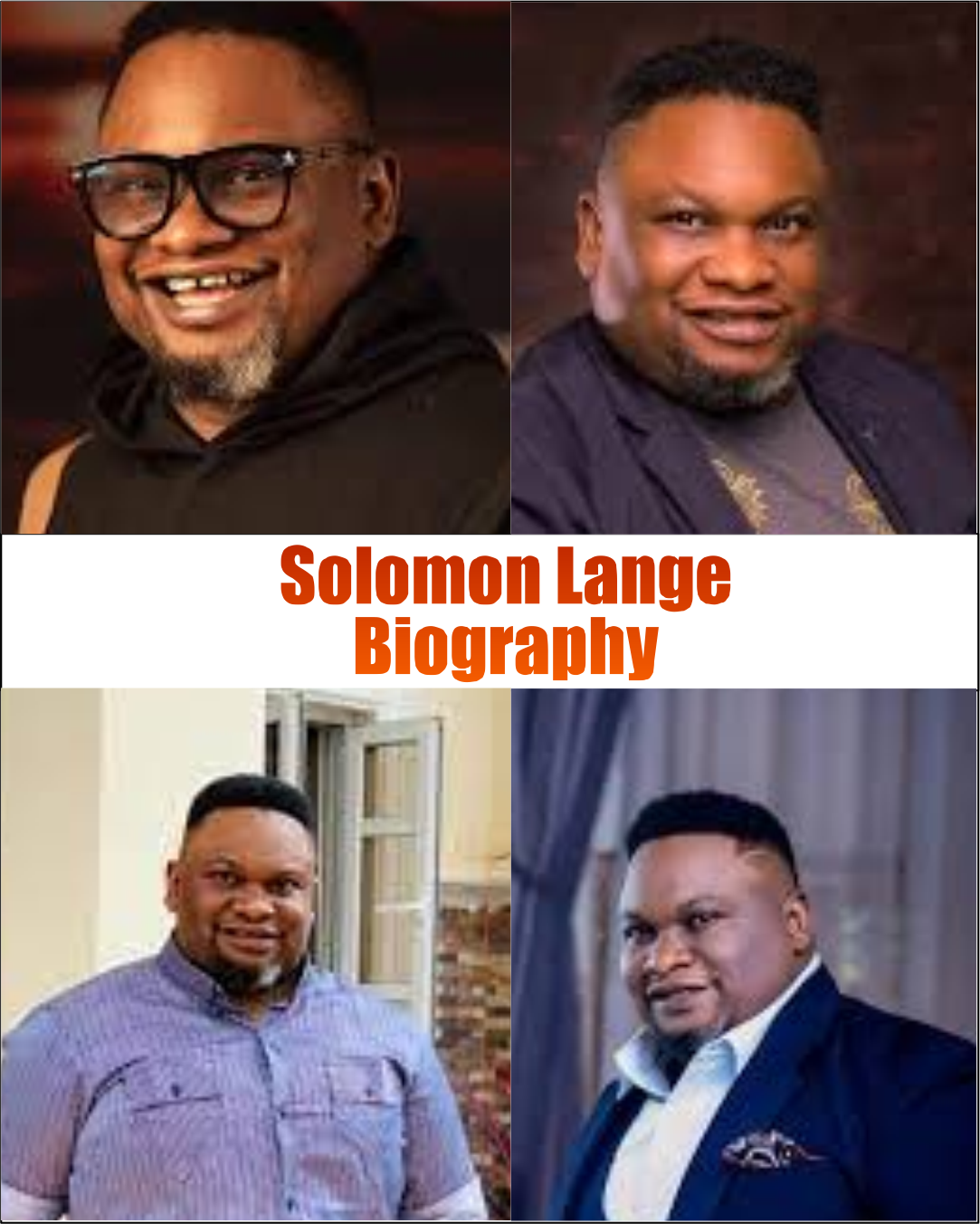
Solomon Lange Biography
The Solomon Lange Biography: From a Small-Town Choir Boy to Africa’s Worship Voice.
There is a moment in every great artist’s life that either breaks them or builds them into something they never imagined. For Solomon Lange, that moment came on a highway somewhere between Kaduna and Yola – not as a triumph, but as a tragedy that would quietly reshape the entire course of his life.
But to understand that moment, you have to go back to the beginning. Back to a small town, a nine-year-old boy, and a Baptist church choir that had no idea what it was nurturing.
Solomon Lange Biography
| Information | Details |
|---|---|
| Full Name | Solomon John Lange |
| Date of Birth | 23 July 1978 |
| Age | 47 years (as of 2026) |
| Place of Birth | Wasa, Sanga LGA, Kaduna State, Nigeria |
| Nationality | Nigerian |
| Occupation | Gospel singer, songwriter, motivational speaker |
| Known For | Blending Hausa and English gospel music and organizing 1voice concert |
| Career Start | Began singing professionally in 1997 |
| Marital Status | Married to Flora Lange with children |
Wasa, Kaduna – Where It All Began
Solomon Lange was born on July 23, 1978, in Wasa, a quiet town in the Sanga Local Government Area of southern Kaduna State, Nigeria, to Deacon John Lange and Mrs. Theresa Lange. He grew up in a household where faith was not background noise – it was the whole conversation. His father’s title alone tells you something about the kind of home it was: a deacon’s house, structured around the church, shaped by scripture.
By the age of nine, he was already singing in his local Baptist church choir – not because someone pushed him there, but because music felt like the most natural language he had. His early influences were as diverse as they were revealing: The Winans, Panam Percy Paul, and Mamman Shata – a blend of American soul gospel, Nigerian Christian music, and traditional northern Nigerian artistry. That eclectic mix would later define a sound nobody else in Nigerian gospel was quite making.
After completing his secondary education, he proceeded to Kaduna Polytechnic where he studied Mass Communication – a course that, in hindsight, makes perfect sense for a man whose entire career would be built on the power of communicating a message.
See also: Surya Bonaly Biography: She Did the Backflip First
The Group, The Mentor, and the Accident That Changed Everything
In 1997, Solomon’s professional journey began when he joined a gospel music group called Kale Visions in Kaduna, led by the late Evangelist Dapo Kalejaiye. Under Kalejaiye’s mentorship, the group travelled and ministered across Nigeria, building both their craft and their calling in the demanding school of live ministry.
Then tragedy struck – sudden, violent, and permanent.
On their way to Yola for a ministerial engagement, a horrific car accident claimed the lives of four members of the group, including their leader Evangelist Kalejaiye. For the surviving members, the grief must have been almost impossible to process. These were not just colleagues – they were brothers in ministry, people bound together by faith and purpose.
What happened next says everything about Solomon Lange’s character. Rather than retreat into grief or abandon music altogether, he and the remaining members co-founded Zion Music Ministry in 2000 – keeping the flame alive in honor of those who had carried it with them. It is the kind of resilience that cannot be taught. It either lives in you or it does not.
By 2002, Solomon stepped out as a solo artist – carrying everything he had learned through loss, mentorship, and years of ministry into a new chapter that was entirely his own.
Na Gode – A Debut That Spoke Two Languages
In 2008, Solomon released his debut solo album Na Gode – a project featuring songs in both Hausa and English. The title itself is significant. Na Gode means Thank You in Hausa – a declaration of gratitude as an opening statement, a theological position disguised as an album title.
The album was bold in ways that went beyond its sound. Nigeria’s gospel music industry at the time was largely dominated by English and Yoruba voices from the south. Solomon was singing in Hausa from Kaduna – intentionally bridging a cultural and linguistic gap that many artists never attempted to cross. The message was clear: worship does not belong to one tribe. It belongs to everyone.
His follow-up album Alheri – meaning Grace in Hausa – arrived in 2012 and firmly cemented his reputation as one of Nigeria’s leading gospel voices. Then came a remarkable run: Grateful in 2014, Grace in 2016, and Victory in 2018 – each album building on the last, each one reaching further than the one before.
Did you know?
Solomon Lange sings fluently in both Hausa and English – making him one of the very few Nigerian gospel artists to successfully build a massive cross-regional fanbase that spans northern and southern Nigeria simultaneously. In a country where music often mirrors ethnic divides, that is no small thing.
The Voice Behind the Songs You Already Know
Some of Solomon’s most beloved songs have taken on a life beyond their albums – sung in churches, played at weddings, and whispered in moments of private prayer. Tracks like You Have Done Me Well, Alheri, Na Gode, Grace, Ma Beru, and Adura Mi Gba have become worship staples across denominations.
What makes his music land the way it does is not just vocal power – though he has plenty of that. It is the theology embedded in the melodies. Solomon’s songs are almost always gratitude-centered, anchored in the idea that praise is not a response to good circumstances but a posture in all circumstances. That message resonates especially deeply in Nigeria, where millions of believers navigate daily hardship sustained largely by faith.
Over the years, Solomon has shared stages with internationally recognized gospel artists including Donnie McClurkin, Panam Percy Paul, Micah Stampley, Sammie Okposo, and Ron Kenoly – a collaboration list that confirms his standing not just locally but within the broader global gospel community.
He also created the 1Voice Concert – a worship gathering designed to unite Christians across denominational lines through music. In a country where religious and ethnic tension can fracture communities, the concept of one voice rising above division carries weight that goes well beyond entertainment.
The Man Behind the Ministry
In May 2015, Solomon Lange married his wife Flora in Abuja. The couple is blessed with two daughters. Flora Lange, by profession a trained skincare specialist and critical care nurse, has been described by those close to the family as an unwavering pillar of support behind Solomon’s ministry.
Unlike many public figures who perform family life on social media, Solomon keeps his home life relatively grounded – sharing enough to feel accessible, private enough to protect what matters most.
As of recent estimates, Solomon Lange’s net worth stands at approximately $500,000 – a figure drawn from music sales, streaming, concert engagements, ministry invitations, and motivational speaking. But to measure Solomon Lange in dollars is to slightly miss the point of his entire career. The currency he has accumulated most deliberately is influence – the kind that lives in people’s faith rather than their feeds.
A Northern Voice in a National Conversation
Perhaps the most underappreciated aspect of Solomon Lange’s story is what he represents geographically and culturally. Northern Nigeria is often discussed in Nigerian media through the lens of conflict, poverty, or religious tension. Solomon Lange offers a different story – one of creativity, spiritual depth, and artistic excellence emerging from the same soil.
He has been nominated at major Nigerian gospel awards including the Music and Entertainment Gospel Awards (MEGA), where he received multiple nominations across categories including Best Worship Song, Best Praise Song, and Best Song in Hausa. Each nomination was a small act of recognition for what his music was doing quietly and consistently – building bridges one song at a time.
Still Singing, Still Building
More than two decades after that first tentative step into professional music, Solomon Lange shows no signs of slowing down. He continues to release music, minister at conferences and revival gatherings, and speak into the lives of younger artists navigating a gospel industry that looks nothing like the one he entered in 1997.
His story is a reminder that the most enduring careers are rarely the flashiest ones. They are built in church choirs, road trips to ministry engagements, albums released in languages nobody else thought to sing in, and the quiet decision – after an unspeakable loss on a highway – to keep going anyway.
That is what Solomon Lange has been doing his whole life. Keeping going. And singing gratitude all the way.
Frequently Asked Questions
1. Who is Solomon Lange?
Solomon Lange is a Nigerian gospel singer, songwriter, worship leader, and motivational speaker known for his powerful voice, inspirational lyrics, and ability to sing in both Hausa and English. He has been active in gospel music since the late 1990s.
2. What is Solomon Lange best known for?
He is best known for his gospel albums like Na Gode and Alheri, his live worship concert called “1voice,” and his role in popularizing gospel music that mixes traditional rhythms with contemporary sounds.
3. When did Solomon Lange start his career?
Solomon began singing as a child in his local Baptist church choir and entered the professional music scene in 1997 with the gospel group Kale Visions Ministry, later becoming a solo artist.
4. Does Solomon Lange have a family?
Yes — he is married to Flora Lange, and the couple has children. Their marriage took place in May 2015 at an event in Abuja, Nigeria.
5. What languages does Solomon Lange sing in?
He performs gospel music in both Hausa and English, combining cultural and spiritual elements that resonate with diverse audiences in Nigeria and abroad.